
Why AI Agents Are Better at Repetitive Decision Making Than Human Employees?
Picture a support agent. She answers ticket number 400 today. Her brain is tired. Her patience is thin. Now picture an AI agent. It answers ticket 400 the same way it answered ticket 1. No tiredness. No mood swings. This gap explains why more businesses now hire an AI agent development company in USA to build systems that never get bored of doing the same task.
Repetitive decisions sound boring. But they run whole businesses. Loan approvals, invoice checks, ticket routing, inventory reorders. All repeat daily. Humans handle them fine at first. Then quality slips.
What Counts As A Repetitive Decision?
A repetitive decision follows a pattern. Same inputs, similar rules, again and again. Think of approving refunds under $50. Or flagging late payments. These decisions don't need creativity. They need consistency.
- Approving or rejecting expense claims
- Routing support tickets to the right team
- Flagging suspicious transactions
- Restocking items at set thresholds
- Scoring leads by simple criteria
None of these are exciting. That's exactly the problem for people.
Human Brains Were Not Built For This
Our brains reward novelty. Do the same task 200 times, and attention drops. Researchers have shown fatigue reduces decision-making ability, attention, and judgment quality over a shift. This isn't laziness. It's basic brain chemistry.
A nurse triaging calls at hour eight makes different judgments than at hour one. A recent study on healthcare workers found some support for this pattern, though results were mixed across settings. Either way, humans drift when tasks repeat.
AI agents don't drift. Decision number 10,000 gets the same logic as decision one. That single fact changes everything for high-volume work.
The Comparison, Side By Side
Line them up and the gaps show fast.
- Consistency after 8 hours: humans drop, agents stay flat.
- Speed per decision: humans take seconds, agents take milliseconds.
- Working 24/7: humans need shifts, agents don't.
- Emotional bias: present in humans, absent in agents.
- Cost per extra decision: rises with human overtime, stays flat for agents.
- True edge cases: humans read context better, agents need rules.
- Carrying a bad day forward: humans do it often, agents never do.
That last point isn't small. Humans carry stress from one call into the next. Machines don't carry anything.
A Real Example Worth Noting
One company with 5,000 customer service agents added AI support tools to their workflow. Issue resolution rose by 14 percent per hour. Handling time per issue dropped by 9 percent. This came from an NBER working paper covered by McKinsey. Small percentage gains, multiplied by thousands of agents, add up fast.
That's the real story. Not magic. Just fewer slow moments and fewer skipped steps.
Why Consistency Beats Talent Here?
A skilled employee can still make a repetitive task worse over time. Boredom breeds shortcuts. Shortcuts breed errors. An AI agent has no boredom to fight.
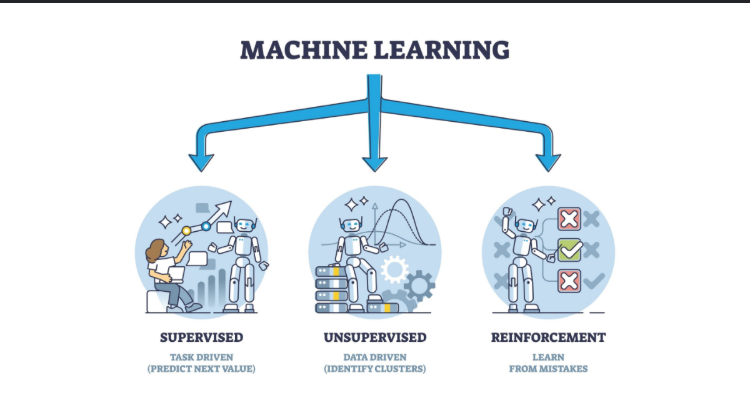
This is where a machine learning software development company adds real value. These teams build agents trained on thousands of past decisions. The agent spots the pattern. Then it applies that pattern without skipping steps, even on decision number 50,000.
Three reasons AI agents hold the edge here:
- They apply the same rule every single time.
- They don't need breaks, shift changes, or sleep.
- They log every decision for instant review.
That third point matters more than people admit. Try auditing a human's mental process from three weeks ago. Good luck. An AI agent's logic trail sits right there in the logs.
Where This Gets Tricky?
AI agents aren't perfect judges. They struggle with true edge cases nobody trained them on. A human notices when something feels off, even without a clear rule. Machines only know what they've seen before.
So the smart setup isn't "AI replaces humans." It's AI handles the repeat work. Humans step in for the weird 2 percent. That split respects what each side actually does well.
Some companies try full automation too fast. Then a strange case breaks the system, and nobody catches it. That's not an AI failure. That's a design failure.
Cost Adds Up Faster Than People Expect
Run the math on a 10-person team making 200 repetitive decisions daily. That's 2,000 decisions. Pay overtime, cover sick days, train new hires when people quit. Costs stack quickly.
An AI agent doesn't quit. It doesn't need sick leave. Setup costs money upfront, sure. But the per-decision cost keeps shrinking as volume grows. Humans don't scale that way. Their cost per hour stays roughly fixed no matter the volume.
Trust Still Needs Building
None of this means blind trust in automation. Every AI agent needs monitoring, especially early on. Wrong patterns learned from bad data will repeat just as fast as good ones. Speed cuts both ways.
Good agent systems include a review layer. Flag confidence scores below a set point. Route those to a person. This keeps speed high without losing the safety net a human check provides.
The Bottom Line
Repetitive decisions reward consistency over cleverness. That's exactly where AI agents win and human attention naturally fades. The fix isn't removing people from the loop. It's giving repeat work to systems built for repeat work, and saving human judgment for cases that actually need it.
Businesses that get this balance right free up their teams for harder problems. The boring 80 percent runs itself. The interesting 20 percent still needs a real person thinking it through.







0 Comments